Stitching skills.
Weaving futures.
The WorkAid Fashion & Design Programme trains young people in Lira, Northern Uganda in practical tailoring and design — building livelihoods one seam, one pattern, one garment at a time. Delivered in partnership with Work Aid UK.
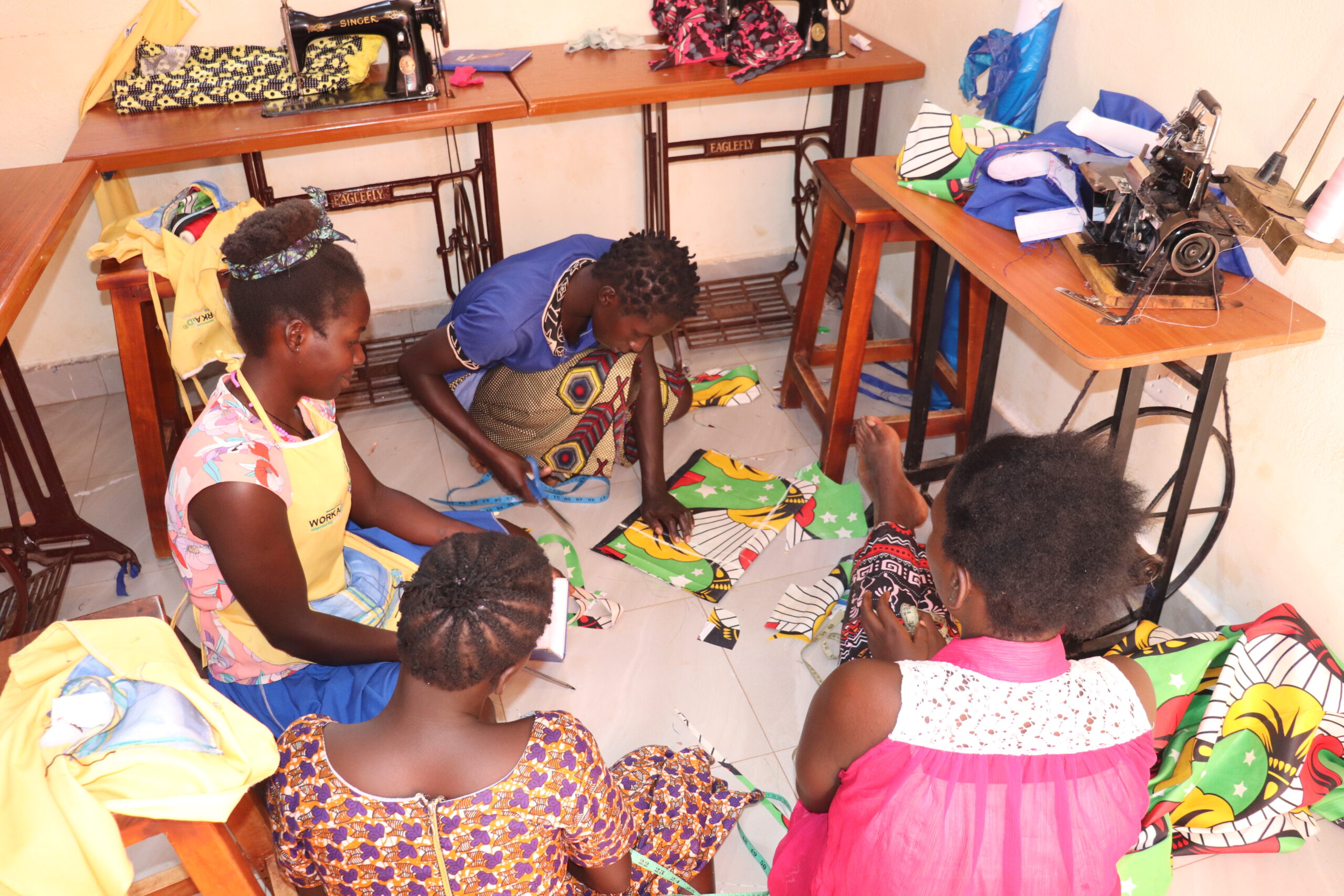
Practical training, built around real futures
Across Northern Uganda, many young people leave school early with few pathways into stable work. The WorkAid Fashion & Design Programme responds directly to that gap — offering structured, hands-on tailoring and design training that turns a needle and thread into a livelihood.
Working in partnership with Work Aid UK, OCA runs the programme from a dedicated training workshop in Lira, where young women and men learn garment construction from first principles: measuring and cutting, machine operation, finishing, and — just as importantly — how to run a small tailoring business once training ends.
The programme is built on the belief that a skill you can hold in your hands is a skill no one can take away from you.
Who we train
Out-of-school and under-employed youth from Lira and surrounding communities.
How we teach
Small cohorts, hands-on studio time, and one-to-one mentorship from skilled tailors.
What follows
Pathways into self-employment, tailoring cooperatives, or further apprenticeship.
Why it matters
Every trained tailor becomes a source of income, dignity, and stability at home.
Activities & training tracks
Each cohort moves through a structured curriculum, blending technical instruction with guided practice on real garments.
Pattern Cutting & Design
Taking measurements, drafting patterns, and translating an idea on paper into a wearable shape.
Machine Sewing
Operating manual and electric machines safely, seam by seam, from straight stitches to finishing.
Detailing & Quality Control
Buttonholes, hems, zips, and the close attention that separates a good garment from a great one.
Business & Entrepreneurship
Costing a garment, sourcing materials, and pricing work fairly — the skills behind the skill.
Mentorship & Confidence
Peer support circles and guidance from graduate tailors who've walked the same path.
Community Showcases
Trainees display finished pieces to families and local buyers — their first taste of a market.
Materials our trainees work with
Cotton & local prints
Plain cotton for foundational practice, and kitenge/ankara prints for finished, market-ready pieces.
Buttons, thread & trims
A working collection of buttons, zips, and coloured thread — the small parts that finish every garment.
Machines & hand tools
Manual and electric sewing machines, tape measures, shears, and pressing irons shared across the cohort.
Local first
Materials are sourced from Lira market vendors wherever possible, keeping value inside the local economy.
Well-being is part of the pattern
Craft skill and physical well-being are taught side by side — a healthy tailor is a working tailor.
Workshop Safety
Safe handling of needles, blades, and machine parts is taught from day one, with clear house rules for a shared studio.
Posture & Ergonomics
Correct seating and machine posture to protect backs, wrists, and eyesight through long hours at the bench.
Eye Care & Lighting
Well-lit workstations and regular breaks to reduce eye strain during detailed, close-up finishing work.
Menstrual Health Skills
Trainees learn to design and sew reusable sanitary pads — turning a fashion skill into a public health contribution.
A tailoring skill only translates into a livelihood if the person holding the needle stays well. OCA treats health guidance — physical safety, hygiene, and reproductive health — as part of the curriculum, not an add-on, so every graduate leaves with both a trade and the habits to sustain it.
Stories from our trainees
Voices from the WorkAid Fashion & Design Programme — to be updated with trainee interviews and photos as each cohort graduates.